Services - Hand & Feet Excess Sweating
Best Services in Town
Excessive sweating of the hands and feet is a common condition that can affect daily activities, social interactions, and confidence. Medically, this condition is known as Hyperhidrosis, specifically palmar hyperhidrosis (hands) and plantar hyperhidrosis (feet). While sweating is a normal body function that helps regulate temperature, people with hyperhidrosis produce sweat far beyond what the body needs.
What is Excess Sweating of Hands and Feet?
Hyperhidrosis is a condition where the sweat glands become overactive. In palmar and plantar hyperhidrosis, the sweat glands in the palms and soles produce excessive moisture even when the body does not need cooling.
This condition may occur:
• At rest
• In cool environments
• During stress or emotional situations
It often begins in childhood or adolescence and may continue into adulthood.
Causes:
Excessive sweating of the hands and feet can occur due to two main types of hyperhidrosis.
1. Primary (Focal) Hyperhidrosis
This is the most common type and usually affects specific areas such as:
• Palms
• Soles
• Underarms
• Face
The exact cause is not fully known, but it is believed to be related to overactivity of the sympathetic nervous system. It may also run in families.
2. Secondary Hyperhidrosis
In some cases, excessive sweating may be caused by underlying medical conditions or medications, such as:
• Hormonal disorders
• Thyroid disease
• Diabetes
• Infections
• Certain medications
Secondary hyperhidrosis usually affects larger areas of the body.
Diagnosis:
Diagnosis is usually made through clinical evaluation by a dermatologist. The doctor will review:
• Medical history
• Pattern and duration of sweating
• Family history
• Possible underlying medical conditions
Sometimes additional tests may be used, including:
• Minor’s iodine-starch test to identify sweating areas
• Blood tests if secondary causes are suspected
Treatment Options:
Treatment depends on the severity of the condition and the patient's lifestyle impact. Several effective options are available.
1. Medical Antiperspirants
• Aluminum chloride–based topical treatments
• Often the first-line therapy for mild cases
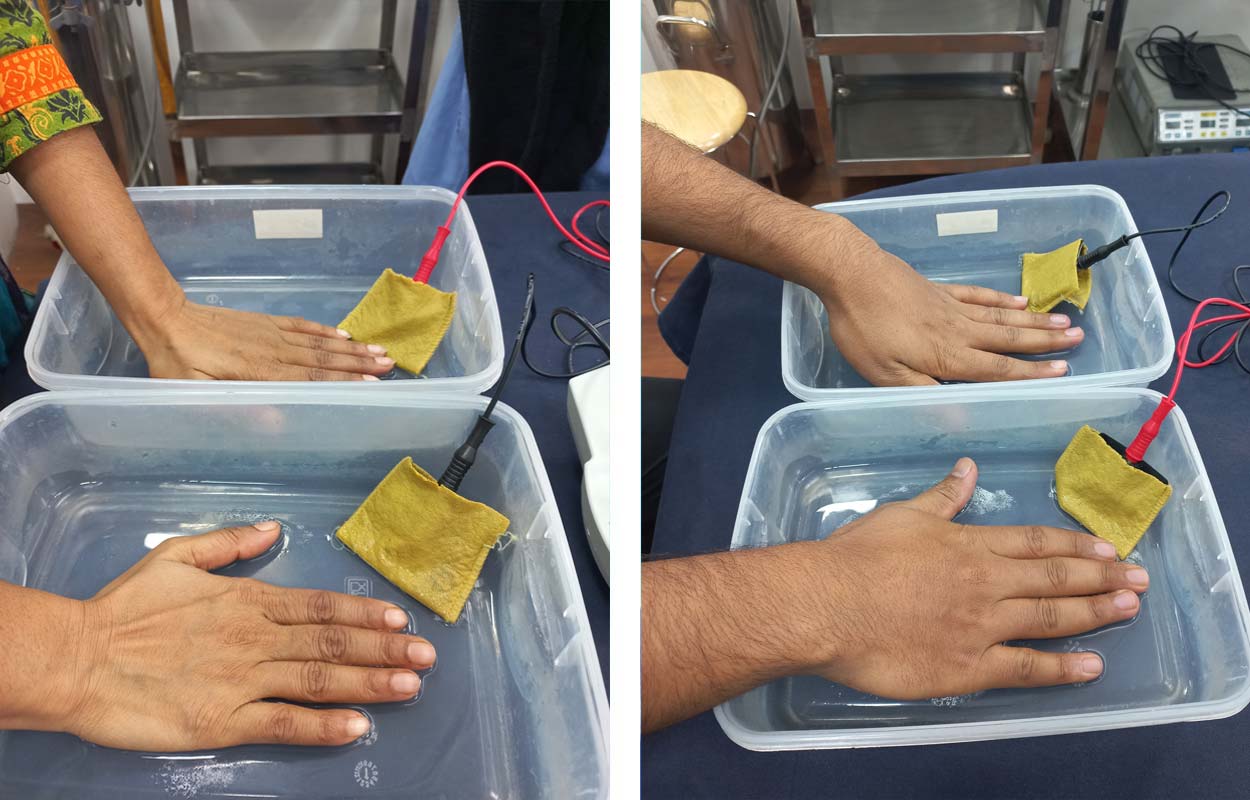
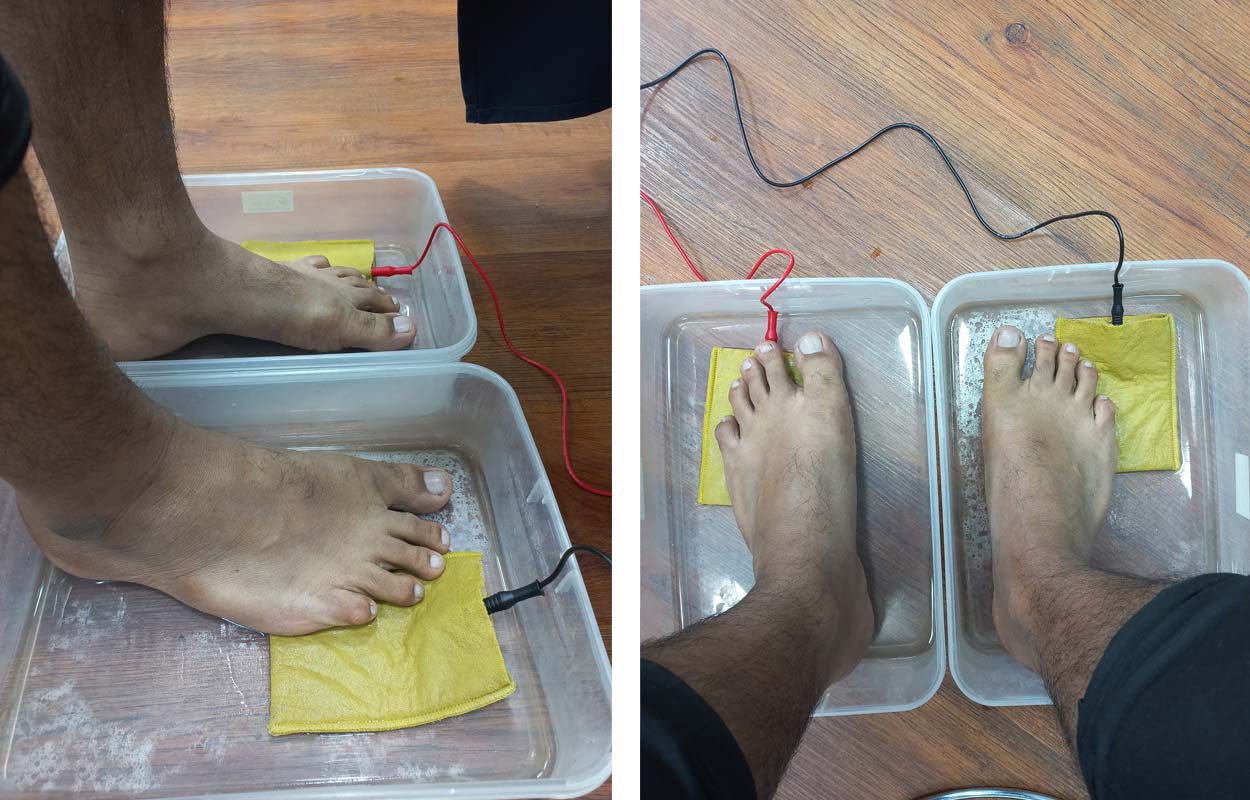
2. Iontophoresis
• A non-invasive procedure using mild electrical currents
• Helps reduce sweat gland activity
• Commonly used for hands and feet
3. Oral Medications
• Anticholinergic drugs may be prescribed in selected cases
• Help reduce sweating by blocking nerve signals
4. Botulinum Toxin (Botox) Injections
• Temporarily blocks the nerves responsible for sweating
• Very effective for palmar hyperhidrosis
• Results may last several months
5. Advanced Procedures
In severe cases, other treatments may be considered, including surgical or energy-based therapies.
When to Seek Treatment-
You should consult a dermatologist if:
• Sweating interferes with daily activities
• You have difficulty holding objects or writing due to sweaty palms
• Foot sweating causes infections, odor, or skin problems
• The condition affects confidence or social interaction